
ISSUES
GOOD GOVERNMENT
On every matter that comes before the City Council, I will always ask who benefits — my employer (that’s you), or some special interest pushing its own agenda. I’ll be a fierce protector of the public interest and public lands, and a fierce opponent of taxpayer giveaways to special interests.
Land speculators, developers, and others with business before the city represent a powerful lobby, but they shouldn’t have the loudest voice in setting public policy. I will not accept campaign contributions from developers or other special interests. I will ask participants in public hearings to disclose any financial ties to applicants. I will seek more transparency in city government.
Housing
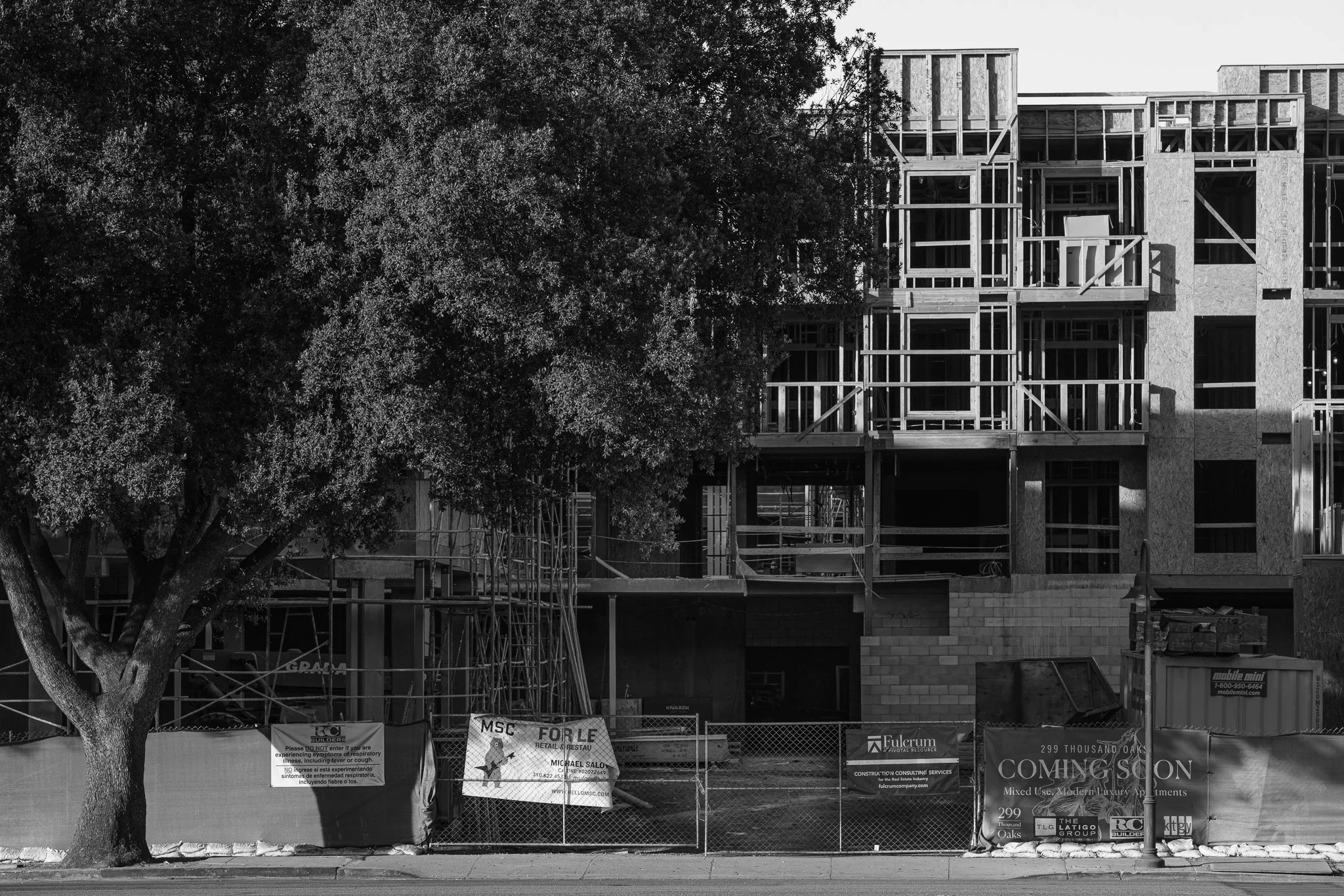
I’m not a fan of ultra-density housing or one-size-fits-all solutions imposed from outside. And I’m not a fan of no growth either; over the past eight years as a planning commissioner I’ve approved far more housing, measured by applications or units, than I’ve rejected. Still, I think it’s mistake to try reducing housing affordability into simple supply-and-demand terms, or to believe we can grow our way out of this complex problem. More density, by itself, will only produce … more density. On the whole, density alone has not made housing more affordable; on the contrary.
Our central issue is this: We produce too many luxury units, and not enough housing people can afford. Over the past eight years, Thousand Oaks met 614% of its quota for luxury housing, and 3% of its quota for families of 4 making up to $100,350/year. These are teachers, firefighters, and medical technicians. These are people without whom our city can’t function.
The score is 614-3: That’s the problem we need to address. We have several tools at our disposal, but we’re not using them to their full advantage:
Bringing our inclusionary housing ordinance, which requires affordable units, out of the coma induced by the City Council in 2009
Eliminating in-lieu fees, resulting in more production of affordable units on site
Adding mixed-use development in existing shopping areas, such as Janss Mall and The Oaks, that would provide more housing and benefit existing businesses
Planning for more village centers distributed throughout the city
Exploring community land trusts, which actually can improve affordability
Providing incentives to promote equity and ownership, either in condos or homes. Equity is an excellent way to build strong communities. Just adding many thousands more apartment units, almost all at market rates, only builds equity for people who own apartment buildings

ENVIRONMENT
We have a climate crisis, but also an opportunity. We can find new ways to recapture water and help mitigate a record drought. We can encourage conversion of lawns into beautiful and drought-tolerant native landscaping. We can make our city more bike-friendly with safer paths to connect neighborhoods. We can lead the state by adopting greener building practices. And we can incentivize a transition away from gas-powered leaf blowers and other small landscaping appliances, which are noisy and harmful for operator and environment alike.
It’s no accident that this is one of the most beautiful areas in the world. It took controlled, measured approaches to planning like SOAR, Measure E, the Parks Initiative, and protected tree ordinances. I’ve consistently voted for projects that protect and enhance environmental safeguards, and against projects that would damage our environment.